
Assembly Commission Leadership Framework
Purpose
Our People and Culture Strategy commits to identifying the key strengths required for effective leadership in the Assembly Commission and use them to enhance how we lead our people, in alignment with our Corporate Values Excellence, Positivity, Integrity and Collaboration.
Responsibilities
Leadership is not confined to formal roles or titles – it is a shared responsibility. We are all responsible for demonstrating leadership through our actions, attitudes, and interactions. We each have a responsibility to continuously develop our leadership strengths, so that we can contribute to a culture of excellence.
Approach
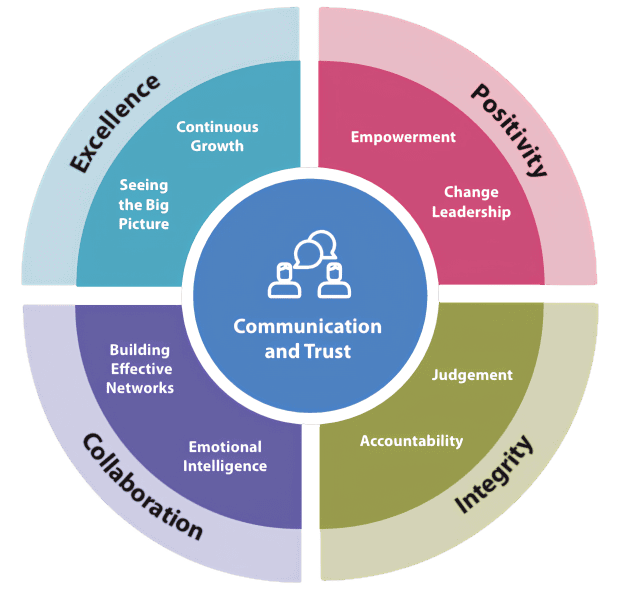
The Framework is comprised of eight leadership strengths, structured around our Corporate Values with communication and trust integrated throughout.
Our Leadership Framework will be embedded in how we go about our work and how we work together to enable the successful operation of the Assembly.
It provides a map for how we assess and develop our practice, in an environment of continuous growth.
It will equip us to lead with confidence, both now and in the future of work.
Our Leadership Strengths
The leadership strengths draw on our knowledge and experience, as well as research and best practice on what it takes to lead with excellence in a parliamentary context.
They outline the knowledge, skills, behaviours and mindsets required to lead self and others.
The leadership strengths are:
Excellence
Seeing the Big Picture
Understand and navigate the wider organisational and parliamentary context and align decisions and work with the Assembly Commission’s Corporate Strategy
Continuous Growth
Create an environment of continuous growth where goals are set and delivered and individuals and teams are encouraged to develop their skills, achieve their goals, and contribute to organisational excellence.
Positivity
Empowerment
Enhance staff autonomy and build trust by delegating responsibility, providing support, and fostering a culture of ownership.
Change Leadership
Successfully navigate and lead through change by responding effectively to shifting priorities, challenges, and stakeholder needs.
Integrity
Judgement
Apply critical thinking and ethical decision-making with transparency and honesty.
Accountability
Take ownership of decisions, actions, and outcomes, ensuring alignment with organisational goals and public expectations.
Collaboration
Emotional Intelligence
Recognise, understand, and manage one’s own emotions while empathising with and influencing the emotions of others.
Building Effective Networks
Create cohesive, high-performing groups, teams and networks by fostering collaboration, trust, and a shared sense of purpose.
Leadership Strengths Matrix
Excellence
Seeing the Big Picture
Why it matters
Leaders who see the big picture ensure that their own efforts – and those of their business areas and teams – are connected, coordinated and contribute meaningfully to the Assembly Commission’s strategic priorities.
They create alignment between day to day activity and wider organisational objectives, enabling decisions that are informed, future focused, and appropriate to the unique requirements of a parliamentary context.
How it’s demonstrated
Strategic Alignment: Aligns work with the Assembly Commission’s strategic priorities.
Organisational Awareness: Understands political and organisational context.
Future Planning: Plans work and anticipates risks and opportunities for long-term success.
How it relates to communication and trust
Seeing the Big Picture builds trust by clearly communicating strategic direction, challenges and progress, and by showing how individual roles and team contributions link to the Assembly Commission’s priorities.
By being transparent about the wider context and the reasons behind decisions, leaders demonstrate honesty and openness, strengthening trust and confidence across teams.
Leadership layers
Self-Leaders: Understand the Assembly Commission’s strategic priorities and contribute meaningfully to team objectives.
Leaders: Align collective efforts – across teams, projects, and areas of influence – with strategic priorities and help colleagues see their impact.
Senior Leaders: Shape strategic direction, anticipate trends and ensure long-term alignment with strategic priorities
Continuous Growth
Definition: Create an environment of continuous growth where individuals and teams are encouraged to develop their skills, achieve objectives, and contribute to organisational excellence.
Why it matters
Continuous Growth supports a culture of learning and improvement, where people feel safe to take appropriate risks, learn from mistakes, and grow.
It promotes curiosity and adaptability, encouraging individuals and teams to develop skills and share learning.
This approach builds confidence and resilience, driving innovation, engagement, and long-term success across the Assembly Commission.
How it’s demonstrated
Development Focus: Sets objectives, engages in learning, and models a growth mindset.
Feedback Culture: Promotes coaching, reflection, feedback and openness.
Celebrating Progress: Recognises achievements and marks milestones.
How it relates to communication and trust
Continuous Growth builds trust by communicating a clear vision for development, setting expectations, and providing consistent, constructive feedback.
Open dialogue and inclusive communication empowers people and teams to grow.
Leadership layers
Self-Leaders: Set personal development goals, seek feedback and support others’ growth.
Leaders: Coach and support colleagues, provide feedback and foster an environment where people feel motivated to learn.
Senior Leaders: Embed a culture of growth, align development with strategic priorities and monitor progress and impact.
Positivity
Empowerment
Why it matters
Empowerment creates a motivated, confident, resilient workforce. When people feel trusted and supported, they use initiative, make decisions, and contribute to the Assembly Commission’s performance.
It encourages ownership and accountability. By fostering autonomy and involving people in decisions, leaders build engagement and trust, strengthening collaboration and supporting long term success.
How it’s demonstrated
Delegation and Ownership: Assign meaningful work and encourage responsibility.
Supportive Leadership: Provide guidance and resources to enable success.
Inclusive Engagement: Seek input and recognise contributions.
How it relates to communication and trust
Empowerment builds trust by communicating confidence in others’ capabilities, offering clarity and support, and creating a safe environment for autonomy and decision-making.
This openness strengthens trust, as people feel respected, valued and encouraged to contribute fully to shared goals.
Leadership layers
Self-Leaders: Take initiative, share knowledge, support others in decision-making and collaborate.
Leaders: Build trust, provide support and feedback and involve colleagues in decisions.
Senior Leaders: Champion a culture of autonomy and trust and create systems that enable ownership and innovation.
Change Leadership
Definition: Successfully navigate and lead through change by responding effectively to shifting priorities, challenges, and stakeholder needs.
Why it matters
Change is a constant in the Assembly Commission’s work. Leaders who approach change positively and pace it appropriately for their teams build resilience, adaptability and effective service delivery.
By providing clarity, reassurance and steady guidance, they help people stay focused, confident and engaged even in uncertain times.
How it’s demonstrated
Adaptability: Adjust plans and priorities effectively.
People-Focused: Understand the impact of change on people and teams.
Clear Communication: Articulate the purpose and process of change.
How it relates to communication and trust
Change Leadership builds trust by clearly communicating the purpose and impact of change, acknowledging challenges, and involving others in shaping the way forward.
By being open to hearing different views and encouraging honest dialogue, leaders show respect for people’s experiences and perspectives, strengthening trust and commitment throughout periods of change.
Leadership layers
Self-Leaders: Embrace change positively, remain flexible and seek solutions.
Leaders: Guide colleagues through uncertainty by communicating clearly, adapting approaches, and fostering innovation.
Senior Leaders: Anticipate external shifts, align strategy and inspire confidence and resilience.
Integrity
Judgement
Definition: Apply critical thinking and ethical decision-making with transparency and honesty.
Why it matters
Sound judgement enables leaders to navigate complexity, weigh competing demands, and make decisions that reflect the Assembly Commission’s values and strategic priorities.
By gathering relevant information, listening to different perspectives and communicating the reasoning behind their choices, leaders build trust and confidence in their decision making, even when outcomes are difficult.
How it’s demonstrated
Ethical Decision-Making: Prioritises fairness and integrity.
Evidence-Based Thinking: Uses data and insights to guide choices.
Transparent Rationale: Communicates decisions clearly and consistently.
How it relates to communication and trust
Judgement builds trust by making ethical, consistent decisions and explaining the rationale in a way that promotes understanding and confidence.
When leaders are transparent about the factors they considered, the options they weighed and the values guiding their choices, people feel reassured that decisions are fair, thoughtful and aligned to the Assembly Commission’s strategic priorities.
Leadership layers
Self-Leaders: Make thoughtful decisions, seek guidance and act with integrity
Leaders: Analyse complex information, balance priorities and communicate decisions transparently.
Senior Leaders: Apply strategic judgement, anticipate implications and model fairness and accountability.
Accountability
Definition: Take ownership of decisions, actions, and outcomes, ensuring alignment with the Assembly Commission’s Corporate Strategy.
Why it matters
Accountability fosters a culture of ownership and high performance.
It ensures that individuals and teams understand their responsibilities, address challenges constructively, and contribute to the Assembly Commission’s success with integrity.
By setting clear expectations and following through on commitments, leaders build trust and confidence, creating an environment where people take responsibility and learn from experience.
How it’s demonstrated
Ownership and Integrity: Takes responsibility for actions and outcomes.
Clarity and Expectations: Defines roles and clarifies performance standards.
Appropriate Oversight: Monitors progress and addresses challenges open.
How it relates to communication and trust
Accountability builds trust by setting clear expectations, communicating openly about setbacks and successes, and modelling honesty and responsibility.
When leaders acknowledge mistakes, share learning and follow through on commitments, people see that actions match words, strengthening trust in both the
leader and the wider organisation
Leadership layers
Self-Leaders: Take ownership of tasks, meet commitments and learn from experience.
Leaders: Set clear expectations, hold self and colleagues accountable, address issues openly, and learn from outcomes.
Senior Leaders: Embed a culture of accountability, model integrity and drive continuous improvement.
Collaboration
Emotional Intelligence
Definition: Recognise, understand, and manage one’s own emotions while empathising with and influencing the emotions of others.
Why it matters
Emotional intelligence strengthens relationships, reduces conflict, and supports inclusive, high-performing teams. It helps leaders create environments where people feel respected, valued, and motivated.
By managing emotions effectively, leaders build trust and understanding, enabling collaboration, resilience, and better decision-making. This fosters a positive culture where people feel heard and supported.
How it’s demonstrated
Self-Awareness: Recognises emotional triggers and areas for growth.
Self-Regulation: Manages emotional responses constructively.
Interpersonal Effectiveness: Builds trust and resolves conflict respectfully.
How it relates to communication and trust
Emotional Intelligence builds trust through clear, respectful communication and empathy.
Strengthens relationships by listening actively, responding with emotional insight, and fostering mutual understanding.
When leaders recognise how their behaviour affects others and adapt their approach thoughtfully, people feel valued, heard and more confident in the relationship.
Leadership layers
Self-Leaders: Manage emotions, show empathy and build positive relationships.
Leaders: Foster a respectful and supportive work environment and address challenges with empathy and professionalism.
Senior Leaders: Model emotional resilience, guide strategic decisions with emotional insight and cultivate trust and inclusion across the organisation.
Building Effective Networks
Definition: Create cohesive, high-performing teams and networks by fostering collaboration, trust, and a shared sense of purpose.
Why it matters
Strong teams and internal and external networks are essential to the Assembly Commission’s success.
Leaders who build effective relationships create environments where individuals thrive, communicate openly, and achieve shared goals.
By fostering collaboration and trust across boundaries, they enable innovation, strengthen organisational resilience, and create a culture where people feel
connected and supported.
How it’s demonstrated
Role Clarity and Collaboration: Define responsibilities and encourage teamwork.
Strengths-Based Leadership: Adapt approach to leverage diverse talents.
Emotionally Intelligent Leadership: Use emotional insight to guide team dynamics and foster an open and respectful environment.
How it relates to communication and trust
Leaders who build effective networks, enhance trust by connecting people and communicating about shared responsibilities. This creates a culture of respect and inclusion where individuals feel valued and supported.
When leaders acknowledge different perspectives and follow through commitments people feel confident in both the leader and the team environment.
Leadership layers
Self-Leaders: Build positive relationships, collaborate and contribute to team success.
Leaders: Clarify roles and responsibilities, create inclusive, collaborative teams and networks and resolve challenges constructively.
Senior Leaders: Build strategic networks, develop high performing teams and foster cross organisational collaboration.
